Little Bluestem: The Native Grass for Every WNC Garden
If you garden anywhere in Western North Carolina and you don’t have little bluestem yet, this is the year to fix that. Schizachyrium scoparium is one of the most beautiful, useful, and low-maintenance native grasses we can grow here, and it looks better in a mountain garden than almost anything you can buy.
It’s native to our region, it shrugs off heat and drought, it feeds birds and butterflies, and it puts on a fall color show that rivals our hardwoods. The only real question is which cultivar to plant. We’ll get to our favorite in a minute — one that also happens to be a staff pick at Hoffman Nursery, one of the biggest grass wholesalers in the country — but first, why this grass belongs in your garden.
Built for WNC Conditions
Little bluestem is a warm-season bunchgrass native to most of the eastern United States, including the dry meadows, balds, and roadside slopes of the Blue Ridge. It’s hardy in USDA zones 3 through 9, which covers every corner of WNC with room to spare.
What makes it such a workhorse here:
- Drought tolerant once established. Deep roots get it through dry August stretches without irrigation.
- Thrives in poor soil. Rocky, sandy, lean, gravelly — the worse the soil, the better it performs. Rich soil actually causes flopping.
- Full sun lover. Six or more hours of direct sun gives you the best color and the most upright form.
- Deer-resistant. Not deer-proof (nothing is), but they leave it alone in nearly every garden we’ve seen.
- No pests, no diseases, no fuss. One cutback in late winter and you’re done for the year.
A Plant for Every Season
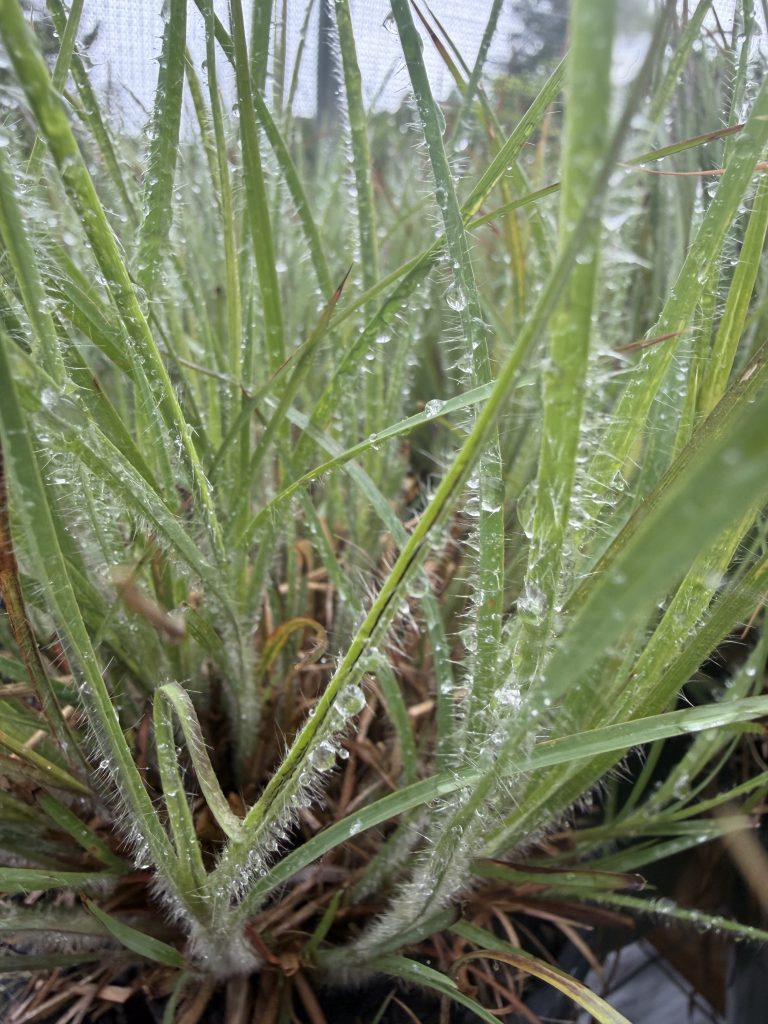
This is where little bluestem earns its place. In spring it emerges as a soft, blue-green tuft. Through summer it stays cool and crisp — a beautiful steel-blue counterpoint to the hot colors of coneflower, black-eyed Susan, and bee balm.
Then fall hits, and the show begins. The foliage shifts to copper, mahogany, orange, and burgundy, often with all those colors on a single plant. Fluffy silver seed heads catch the late afternoon light and glow. The color holds through winter, giving structure and movement to the garden when everything else has gone to sleep. Snow on bluestem is one of the prettiest things in a winter landscape.
Wildlife Value That Punches Above Its Weight
Little bluestem is one of the most ecologically valuable grasses you can plant in a WNC garden. It’s a host plant for several skipper butterflies, including the common wood nymph and crossline skipper. Native bees use the foliage and stems for shelter and overwintering. In late fall and winter, those silver seed heads feed dark-eyed juncos, song sparrows, and goldfinches.
If you’ve been adding native perennials to support pollinators, adding bluestem rounds out the habitat — flowers feed adults, but it’s the grasses that shelter and host the next generation.
Our Pick: ‘Ha Ha Tonka’
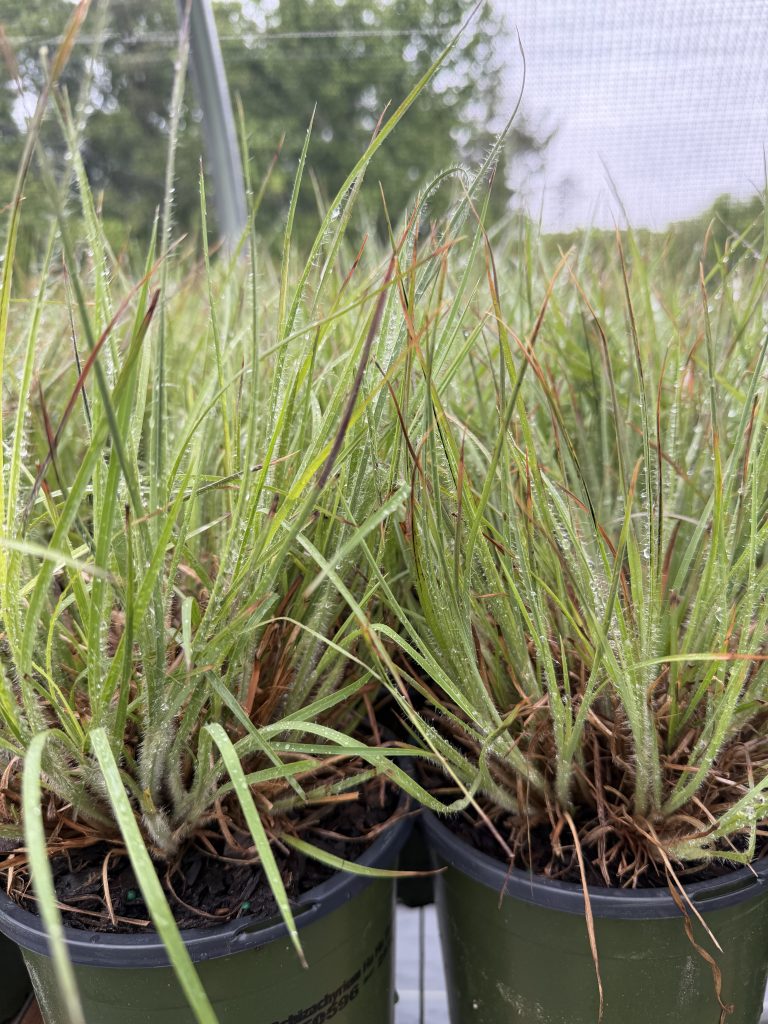
Here’s where it gets interesting. The straight species is gorgeous, but it can flop in a cultivated garden, especially in richer soil or part shade. That’s why cultivars matter, and we have a clear favorite at Flat Creek: Schizachyrium scoparium ‘Ha Ha Tonka’. It’s also a staff pick at Hoffman Nursery — the largest specialty grass grower in the country and one of our trusted wholesale sources — which is high praise from people who grow ornamental grasses for a living.
Selected from a population at Ha Ha Tonka State Park in Missouri and brought into the trade through Intrinsic Perennial Gardens, this cultivar was a top performer in Mt. Cuba Center’s extensive little bluestem trial. Here’s why we keep recommending it:
- It stands up. ‘Ha Ha Tonka’ is genuinely upright. No flopping, no splaying open in the middle after a summer storm. This is the single biggest complaint about little bluestem in the garden, and this cultivar solves it.
- Better blue. The summer foliage is a richer, cleaner blue-green than the species average. It reads as an intentional design plant, not a weedy meadow grass.
- Spectacular fall color. Reds, oranges, and purples blend across the clump, and the color holds longer than most cultivars we’ve trialed.
- Reasonable size. About 3 to 3.5 feet tall in flower, 2 feet wide. Big enough to read in the landscape, small enough to fit in a residential bed.
- Strong all-region performance. It’s not just a Missouri plant — it does beautifully in our humidity and rainfall, which is more than you can say for some western-bred cultivars.
How to Use It in Your Garden
Little bluestem looks best planted in groups of three, five, or seven rather than as a single specimen. It’s the kind of plant that reads as texture from a distance, so quantity matters. Try it:
- As a meadow-style sweep behind shorter perennials
- Mixed with coneflower, mountain mint, asters, and goldenrod for a low-maintenance pollinator border
- Lining a sunny driveway, mailbox, or hellstrip where soil is poor and dry
- As a soft, moving counterpoint to evergreen shrubs or stone walls
- In place of overused ornamental grasses like miscanthus or pampas grass — both of which can self-seed aggressively in our region
Care Notes
Plant in spring or fall, water through the first season, and then leave it alone. Don’t fertilize — it makes the foliage floppy. Cut the previous year’s growth back to about 4 inches in late February or early March, before new growth emerges. That’s the entire annual care plan.
Stop by Flat Creek to see ‘Ha Ha Tonka’ on the bench — once you see the color and the upright structure in person, you’ll understand why it’s our top recommendation for WNC gardens.