
Plant Guide · Evergreens & Screening Trees
North Pole vs. Emerald Green Arborvitae:
Which One Belongs in Your WNC Garden?
Both are beloved screening trees — but for Western North Carolina landscapes, one has a clear edge.
If you’re searching for evergreens in Asheville or browsing options for screening trees in Western North Carolina, arborvitae will almost certainly come up. And when it does, two cultivars dominate the conversation: Emerald Green and North Pole®. They look similar at a glance, they serve the same basic purpose, and they even share the same species — Thuja occidentalis. So what’s the real difference, and which one should you plant?
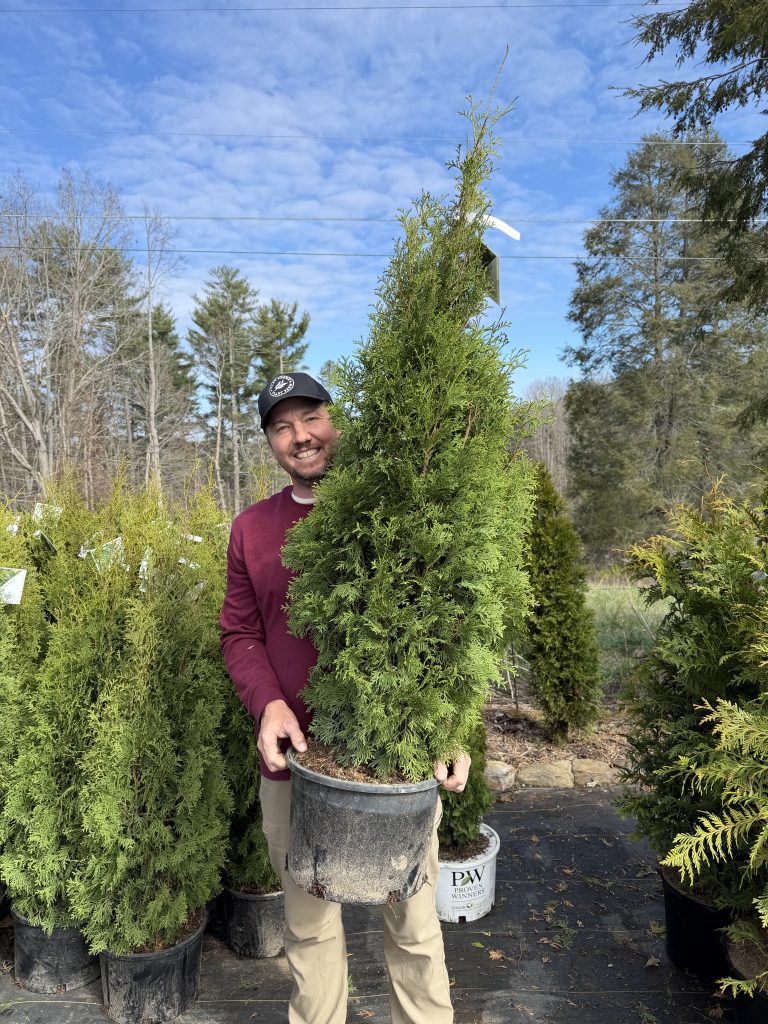
Having grown both at Flat Creek Plant Farm here in Weaverville, we’ve had a few seasons to watch them side-by-side in our WNC conditions. Our take: North Pole is the better plant for most situations in this region — and once you understand why, we think you’ll agree.
First, the Basics
Both North Pole and Emerald Green are cultivars of Eastern White Cedar (Thuja occidentalis), a native species from the northeastern U.S. and Canada. Both grow in a tight, upright column and are used overwhelmingly as privacy screens and hedges. Neither requires much fussing — no major pruning, no fussy soil amendments, no specialist knowledge. That shared foundation is exactly why they get compared so often.
Here’s where they start to diverge:
| Characteristic | North Pole® | Emerald Green |
|---|---|---|
| Mature Height | 12–15 ft | 12–15 ft |
| Mature Width | 3–4 ft | 4–5 ft |
| Growth Rate | Faster (noticeably so) | Slow |
| Light Tolerance | Full sun and part shade | Full sun preferred |
| Hardiness Zones | Zones 3–7 | Zones 4–8 |
| Winter Foliage Color | Deep, dark green — holds color | Rich green, winter bronzing |
| Winter Burn Resistance | Excellent | Good |
| Form | Slightly more narrow | Broader pyramid |
| Availability / Sizing | Increasingly available | Widely produced, more size options |
| Price | Slightly higher (Proven Winners) | Lower cost, widely available |
Why North Pole Wins in Western North Carolina
Western North Carolina sits in USDA Hardiness Zones 6b and 7a depending on elevation and microclimate. Asheville and the surrounding mountain communities experience cold winters, late-spring frosts, significant temperature swings, and — critically — a lot of dappled and partial shade from the surrounding ridgelines and forest canopy. Those conditions shape which plants thrive and which merely survive.
1. Shade Tolerance Is a Real Advantage Here
Plenty of Western NC properties aren’t bathed in eight hours of direct sun. Hillside lots, homes near tree lines, north-facing slopes, and properties in wooded neighborhoods often deal with several hours of shade per day. Emerald Green arborvitae wants full sun — it’ll tolerate some shade, but it’s not where the plant shines.
North Pole performs well in partial sun (four to six hours) without sacrificing density or form. For many of our customers here in Weaverville and the greater Asheville area, that flexibility is the deciding factor right there.
2. It’s Genuinely Faster Growing
This one surprised us when we first started growing them. North Pole’s faster growth rate is real and observable — not just marketing copy. If you’re planting a new screen along a property line or filling in a fence gap, that extra speed matters. In a region where gardeners are understandably impatient to establish privacy from new neighbors or a road, getting there a season sooner is a genuine benefit.
“After growing both side-by-side for a couple of years, we’re sold on North Pole. The faster growth rate, shade tolerance, and narrow form make it a cut above for Western NC gardens — and worth the slight extra expense.”
3. Narrow Form Fits Mountain-Sized Lots
Many WNC properties are narrower than they look on paper, especially on hillside lots where usable flat ground is at a premium. North Pole’s narrower footprint — topping out around three to four feet wide versus Emerald Green’s five — means you can fit more trees in a row, plant closer to structures without worrying about encroachment, and keep walkways and driveways clear over time.
In landscaping terms, North Pole is the columnar sports car where Emerald Green is the sensible sedan. Both get you there — but one takes up less lane.
4. Winter Color That Holds Its Own
Winter foliage browning and “winter burn” is a recurring frustration with arborvitae in colder climates. North Pole was bred specifically to resist this, maintaining that rich, deep green well into winter even during temperature swings. For a plant being used as a year-round screen — which is almost always the use case for arborvitae in Western North Carolina — holding color through December, January, and February is a meaningful advantage.
North Pole: Pros & Cons
Advantages
- Handles partial shade gracefully
- Noticeably faster growth rate
- Stays sliughtly more narrow — great for tight spaces
- Excellent winter burn resistance
- Deep green color holds all winter
- Proven Winners genetics
Limitations
- Slightly higher price point
- Not always available in large 15- or 25-gal sizes
- Like all Thujas, not deer-proof
When Emerald Green Still Makes Sense
Emerald Green isn’t going anywhere — and we’d be misleading you if we said otherwise. It’s a proven performer with decades of track record in American landscapes. There are still situations where it’s the right call:
Large-scale screening projects — if you need twenty or thirty plants to screen a long fence line or field edge, Emerald Green’s wider production and lower price tag adds up fast. The cost difference per tree becomes significant when multiplied across a big planting.
When larger transplant sizes matter — for instant impact or to screen a problem area immediately, Emerald Green is more commonly available in 15- and 25-gallon sizes from a broader pool of growers. If you need big plants now, it may simply be the more practical option, though that is changing.
Our Recommendation
For Prime WNC Real Estate, Go North Pole
If you’re planting along a foundation, a key property line, a courtyard, or anywhere the planting will be visible and prominent — North Pole is worth the extra few dollars per plant. The narrower footprint, faster pace, and shade tolerance simply make it the better-suited arborvitae for the varied conditions of Asheville, Weaverville, and surrounding WNC communities. For large back-boundary plantings where cost is the primary driver, Emerald Green remains a solid and trustworthy choice.
Planting Tips for Arborvitae in Western North Carolina
Whichever cultivar you choose, a few fundamentals apply to getting arborvitae established well in our mountain conditions:
Spacing: For a solid privacy hedge, plant North Pole three to four feet on center. For Emerald Green, four to five feet on center. Closer spacing gives you faster screening; wider spacing allows for better long-term air circulation and reduces disease pressure. We prefer two rows whenever possible, and a bit wider spacing. This is better for the plants and gives you a denser screen more quickly.
Soil & Drainage: Arborvitae prefer evenly moist, well-drained soil. WNC’s clay-heavy soils can hold too much water in low spots — avoid planting in areas where water pools after rain. Amending the backfill with compost or soil conditioner improves drainage and gives roots an easier start.
Watering the First Season: Both cultivars need consistent moisture through their first summer. Deep watering once or twice a week during dry spells is the way to go in heavy clay. Once established, they’re far more drought tolerant.
Mulch: Apply two to three inches of hardwood mulch around the base, keeping it away from the trunk. Mulch retains moisture, moderates soil temperature, and suppresses competition from grass and weeds — all important in a WNC summer.
Deer Pressure: Deer are a real challenge in this region, and Thuja occidentalis cultivars are not deer-resistant. If browsing pressure is high on your property, protect young plantings with fencing or consistent repellent applications, especially in winter when natural food sources thin out. Liquid Fence is one that has worked for us, but you have to be consistant with it through the winter.
Ready to find the right arborvitae for your property?
Visit Flat Creek Plant Farm in Weaverville, NC. We carry North Pole® and selected arborvitae varieties seasonally — our staff is happy to help you match the right plant to your specific site conditions in WNC.