MOUNTAIN GARDENING · WESTERN NORTH CAROLINA
Black Dragon Cryptomeria: A Striking Evergreen from the Mountains of Japan
Drive through any well-tended garden in Asheville, Brevard, or the Cashiers plateau in late winter, and you may catch a flash of something unexpected — a deep, brooding column of near-black foliage rising from the frost-silvered ground. That is almost certainly Cryptomeria japonica ‘Elegans Viridis’, or more likely its celebrated sister cultivar: Black Dragon.
Western North Carolina, with its mountain ridges topping five and six thousand feet, its acid soils, and its reliable rainfall, offers growing conditions that echo, in surprising ways, the misty highland forests of Honshu and Kyushu where Japanese cedar — sugi — has been revered for centuries. In that ecological kinship lies the secret to why Black Dragon cryptomeria has become one of the most coveted conifers in the region’s horticultural scene.
§ Portrait of a Dragon
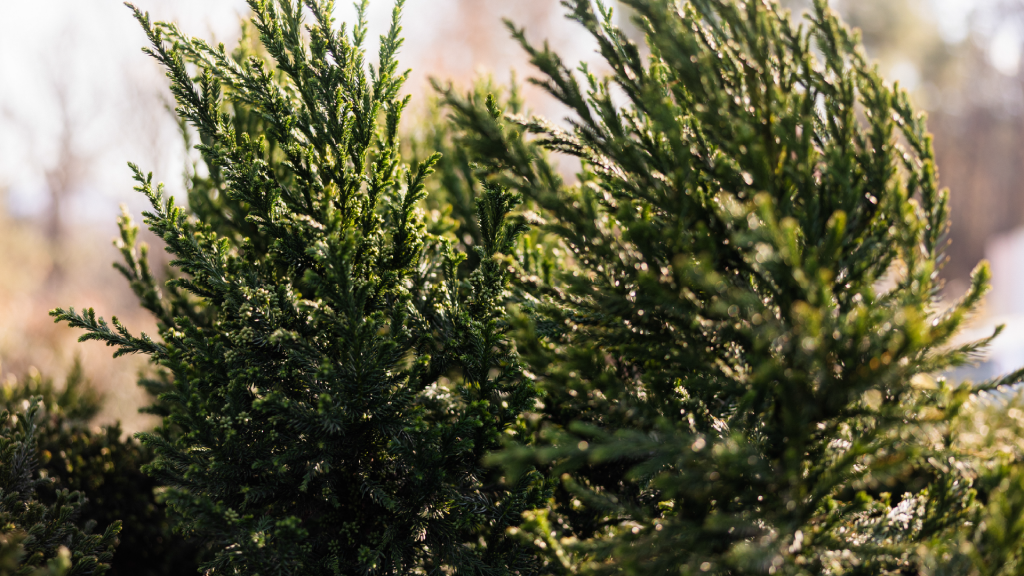
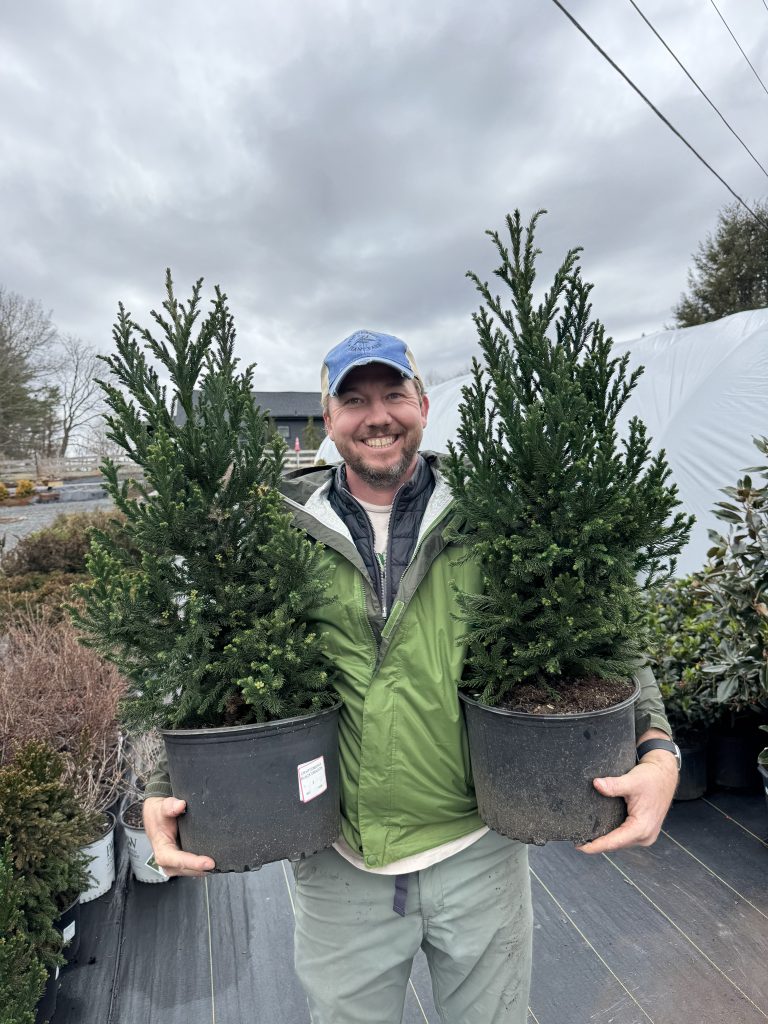
Cryptomeria japonica ‘Black Dragon’ is a slow-growing dwarf conifer, though “dwarf” is relative — given a few decades, it can reach 6 to 10 feet in height with a densely layered, broadly columnar form. What distinguishes it from other cryptomeria cultivars is its foliage color: the spirally arranged, awl-like needles emerge a deep blue-green in spring and summer and deepen dramatically in autumn and winter, approaching a plummy near-
black that gives the plant its evocative name.
The texture is uniquely luxurious — soft to the touch compared to many conifers, almost feathery — and the plant’s dense layering creates shadow play within itself that enhances the sense of depth and darkness. In the low winter sun of a mountain January, a well sited specimen can look almost sculptural, like a piece of living obsidian pulled from the ridge.
§ Why Western North Carolina?
The Southern Appalachians are, by national standards, an anomalous growing environment. Summer humidity is high but temperatures rarely reach the brutal extremes of the Carolina Piedmont. Winters are genuine — hard frosts are common, and occasional ice storms coat the high country — but the mountains moderate temperature swings in ways that protect marginally hardy plants. Cryptomeria japonica is rated for USDA Zones 5 through 9, and the WNC mountains fall neatly in Zones 6 and 7, making the match nearly ideal.
Rainfall is another critical factor. Asheville averages nearly 48 inches of precipitation per year; Brevard, nestled against the Blue Ridge Escarpment, earns its nickname “The Land of Waterfalls” with totals that can exceed 65 inches. Cryptomeria, which naturally inhabits the fog-drenched forests of Japan, rewards this generosity with vigor. Established plants that might sulk in the dry summers of the lower South positively thrive in the WNC highlands.
Soil chemistry, too, plays a role. Mountain soils here tend toward the acidic — a legacy of granite and gneiss bedrock and centuries of leaf mold from oak, chestnut, and hemlock forests. Cryptomeria prefers a pH between 5.5 and 6.5, a range that WNC gardeners seldom need to engineer.
§ Planting & Care in the Mountains
Black Dragon is not a fussy plant once established, but it rewards thoughtful siting. It prefers full sun to partial shade — in WNC’s occasionally brutal August afternoons, a site with light afternoon shade can prevent needle scorch on younger plants. Avoid low spots and frost pockets, where cold air pools in winter, the tips of branches can get nipped with frost. Good air circulation discourages the occasional fungal issue, though cryptomeria is notably disease-resistant compared to many conifers.
Plant in spring or early fall, amending heavy clay soils with compost or soil conditioner to improve drainage. While cryptomeria can handle moist soil, it does not want to sit in standing water. A two-to-three-inch layer of
mulch — shredded hardwood bark works well — helps maintain soil moisture through dry spells and regulates root temperature. Deep, infrequent watering through the first two seasons establishes the root system; after that, mature plants handle typical mountain drought cycles without complaint.
Quick Reference:
Black Dragon Cryptomeria Scientific name: Cryptomeria japonica ‘Black Dragon’ ▲ Mature size: 6–10 ft. tall, 3–5 ft. wide (slow growth) ▲
Hardiness zones: USDA 5–9 (WNC: Zones 6b–7a) ▲
▲ Sun: Full sun to partial shade
▲ Soil: Moist, well-drained, slightly acidic (pH 5.5–6.5)
▲ Water: Moderate; drought-tolerant once established
▲ Foliage: Deep blue-green; darkens to near-black in winter ▲ Deer resistance: Moderate to good
Best use: Specimen, focal point, evergreen screen, Japanese ▲
style garden
§ Landscape Uses
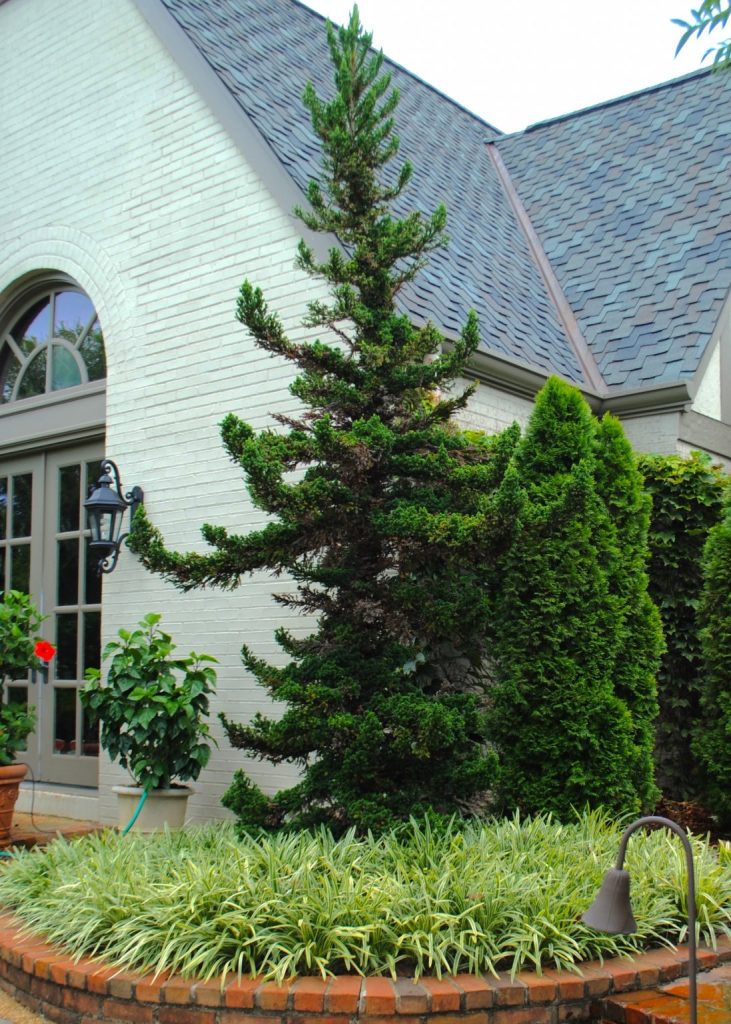
In WNC gardens, Black Dragon earns its keep as a four-season specimen. In spring, new growth emerges in brighter greens, offering subtle contrast against the dark backdrop of older needles. Summer finds it a study in rich, layered texture. Autumn is when the drama begins: as light shortens and temperatures dip, the foliage deepens progressively through the growing season’s final weeks. Winter is its hour of glory — that near-black silhouette against snow, or backlit by a pale winter sky, is simply unforgettable.
Garden designers in the region frequently pair it with ornamental grasses, whose warm tawny tones in winter create a striking contrast with the dark foliage. Hellebores, with their late-winter blooms in plum, slate, and cream, make exceptional companions at the plant’s feet. For a more formal arrangement, a matched pair flanking an entry or gate — a use with deep roots in Japanese garden design — makes a statement that grows more powerful with every passing year.
Rhododendron and mountain laurel, native to the same hillsides where Black Dragon thrives, create naturalistic combinations that feel ecologically coherent and visually harmonious. The Appalachian tradition of layered shade gardening, with its emphasis on texture and foliage over bloom, suits cryptomeria perfectly.
§ A Living Heirloom
Cryptomeria has been grown in Japan for millennia — the ancient cedar avenue at Nikkō, lined with thousands of trees planted in the 1600s, stands as a monument to the species’ longevity and cultural significance. In the scale of a Western North Carolina mountain garden, Black Dragon will not reach those heights, but it offers something equally valuable: a slowly deepening presence, a plant that rewards patience, that becomes more itself with every decade. In a horticultural moment often dominated by fast, disposable, and trend-driven choices, there is something profoundly satisfying about planting a Black Dragon — knowing that it will outlast you, and that it will be more beautiful in thirty years than it is today.
The mountains of western North Carolina have always been a place where old things endure — old mountains, old forests, old traditions. The Black Dragon cryptomeria, rooted in the soils of the Southern Appalachians, quietly joins that company.
Black Dragon, and the whole Japanese cedar family have become one of our favorite conifers for the WNC area. Their unique shapes, deer resistance, and less common use lends a touch of class to Asheville landscapes.