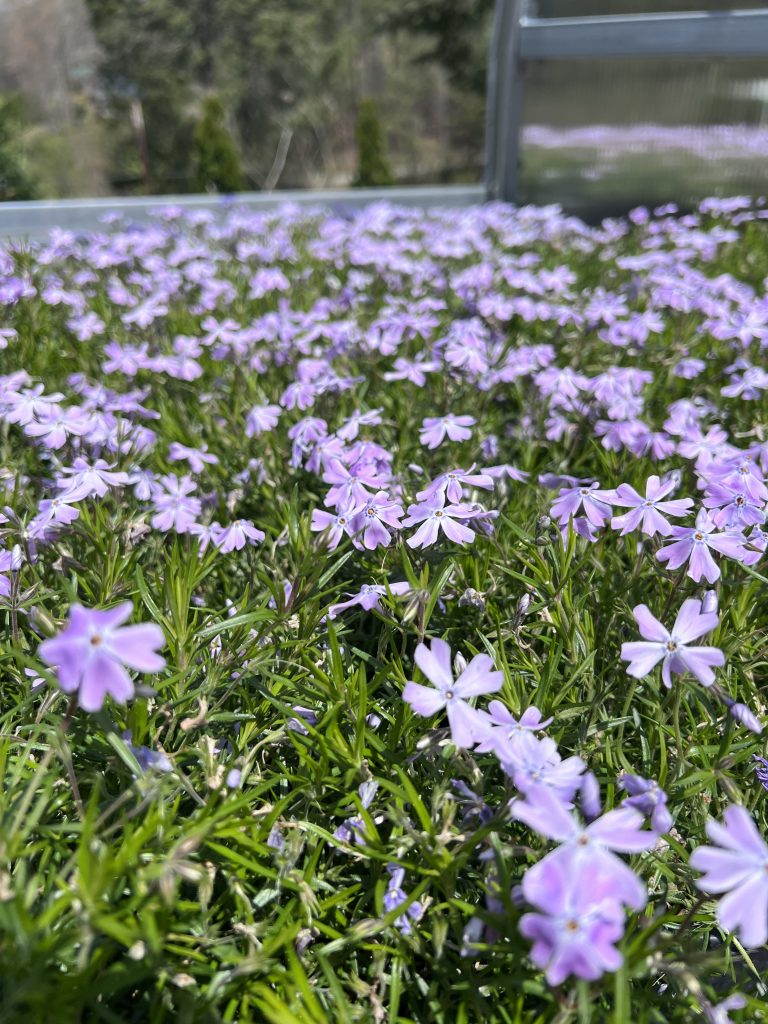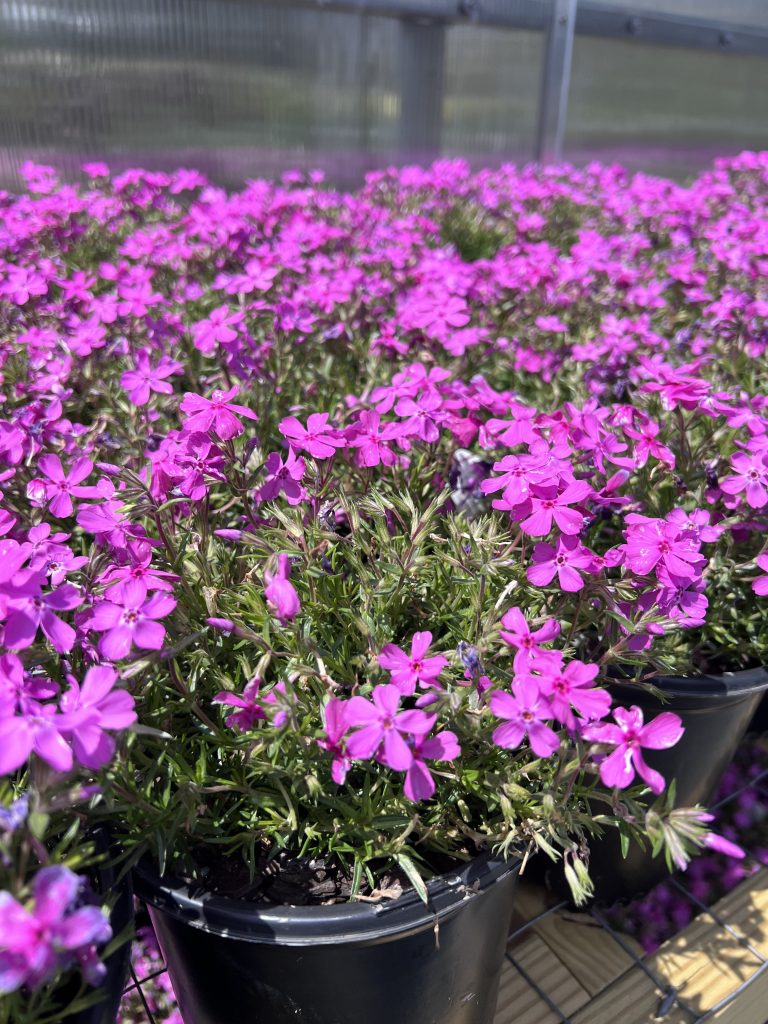
If you’ve ever driven past a hillside or garden wall smothered in a thick carpet of pink, purple, or white flowers in spring, there’s a good chance you were looking at creeping phlox (Phlox subulata,) otherwise known as thrift in the mountains. This low-growing perennial is one of the most rewarding groundcovers a gardener can add to their landscape — tough, reliable, and breathtakingly beautiful when it blooms. Whether you’re trying to cover a rocky slope, edge a pathway, or simply fill in a bare patch of ground, creeping phlox deserves a serious look.
The Appeal of Creeping Phlox in the Landscape
Creeping phlox earns its name honestly. It spreads steadily along the ground, forming dense mats of needle-like evergreen foliage that stay attractive even into winter, though some varieties can get a bit shaggy. Come spring — typically late March through April for those of us near Asheville, NC— the foliage nearly disappears beneath a profusion of small, five-petaled flowers in shades ranging from bright magenta and lavender to soft pink and crisp white.
The visual impact during peak bloom is hard to overstate. A mature clump can spread two feet or more across, and when multiple plants grow together, the effect is like a living tapestry draped over the ground. It’s particularly stunning cascading over retaining walls, tumbling down slopes, or spilling along the edges of garden beds.
Popular Varieties Worth Knowing
There are quite a few popular varieties of phlox, and all are hardy to zones 3 or 4, plenty hardy for the Asheville area. ‘Emerald Blue’ produces soft lavender-blue flowers and is one of the most widely planted varieties. ‘Candy Stripe’ features charming pink-and-white bicolor blooms. ‘Scarlet Flame’ leans toward a vivid rosy-red, while ‘Snowflake’ offers a clean, bright white and a mounding habit. All share the same easygoing nature, so variety selection mostly comes down to color preference and how the plant will work with surrounding plantings.
One of our favorites is Drummond’s pink, which has a dense habit and seems to hold up well in winter with some wind protection.
Growing Conditions: What Creeping Phlox Needs to Thrive
One of the best things about creeping phlox is that it genuinely thrives in conditions where many plants struggle. Understanding its preferences will help you place it where it performs best.
Sunlight and Soil
Creeping phlox is a sun-lover. It performs best in full sun — at least six hours of direct sunlight per day — though it will tolerate light afternoon shade in hotter climates. Too much shade leads to sparse flowering and loose, floppy growth rather than the tight, dense mats the plant is known for.
Soil drainage matters far more than soil fertility. Creeping phlox hates sitting in wet or waterlogged soil, which can cause root rot and quickly kill established plants. It actually thrives in poor, rocky, or sandy soils where drainage is excellent. This makes it a fantastic choice for slopes, rock gardens, and any spot where the ground tends to stay dry. If your soil is heavy clay, amend it generously with soil conditioner before planting, or consider raised beds.
And don’t forget a good bark mulch!
Watering and Fertilizing
Once established, creeping phlox is quite drought-tolerant. During its first season, water regularly to help roots get established, but after that, supplemental irrigation is rarely needed except during prolonged dry spells. When in doubt, err on the dry side — overwatering is a more common problem than underwatering with this plant.
Creeping phlox doesn’t need much fertilization. A light application of a balanced slow-release fertilizer in early spring is plenty. Overfertilizing, especially with nitrogen-heavy products, promotes lush leafy growth at the expense of flowers.
Planting and Care Tips
Spring and early fall are the best times to plant creeping phlox, giving roots time to establish before the stress of summer heat or winter cold. Space plants 12-18 inches apart — they’ll fill in over a season or two. Plant at the same depth they were growing in their nursery container, and water well after planting. The main issue is preventing weeds while they fill in the gaps. A good thick mulch is the best solution, but a pre-emergant like Preen can also help considerably if you apply it before weeds emerge.
Pruning for Better Performance
After the spring bloom fades, give your creeping phlox a light trim — cutting back about one-third of the plant’s length. This encourages fresh, compact new growth, prevents the center from becoming woody and bare, and often prompts a light second flush of blooms in some varieties. Use garden shears or even hedge clippers for larger plantings. Don’t be timid: the plant responds well to this pruning and will come back fuller and healthier.
Dividing Established Clumps
Every three to five years, older clumps may start to die out in the center. When this happens, dig up the plant in early spring or fall, discard the woody center, and replant the vigorous outer sections. Division also gives you free plants to expand your planting elsewhere in the garden.
Creeping Phlox in Asheville and Western North Carolina Gardens
For gardeners in the Asheville area and throughout Western North Carolina, creeping phlox holds a special place — it’s not just a well-behaved garden plant, it’s a true regional native. Phlox subulata grows wild across the Appalachian highlands, thriving in the thin, rocky soils and varied elevations that define the Blue Ridge landscape. That native heritage means it’s perfectly adapted to the WNC climate: the cold winters, the warm humid summers, and the well-drained mountain slopes that challenge plants from other regions.
Choosing native perennials like creeping phlox for Asheville and Western NC landscapes comes with real ecological benefits. Native pollinators — including early-season bees that emerge when little else is blooming — rely on the nectar-rich flowers. Because creeping phlox is already adapted to local soil conditions and rainfall patterns, it also requires far less supplemental watering and fertilizing than non-native alternatives, making it a smart choice for sustainable, low-input gardening in the mountains.
If you’re building a native plant garden in the Asheville area, creeping phlox pairs beautifully with other Western North Carolina native perennials like wild columbine (Aquilegia canadensis), baptisia, and amsonia in spring.
Common Uses in the Garden
Creeping phlox is remarkably versatile. It excels as a ground cover on slopes and banks where erosion is a concern, as the roots help hold soil in place. It’s a classic choice for rock gardens, where it spills gracefully between stones. Along pathways and garden borders, it creates a soft, colorful edge that stays tidy with minimal effort. It can even be grown in containers or window boxes, though it’s at its best when allowed to spread freely in the ground.
Few plants offer the combination of spring color, year-round evergreen interest, low maintenance, and adaptability that creeping phlox brings to the table. If you have a sunny, well-drained spot that needs covering, get you some thrift, as they say in the mountains.