5 Reasons to Grow Baptisia in Western North Carolina
If you garden in the mountains around Asheville, you already know the challenges: heavy clay soil, summer drought stretches, hungry deer, and winters that can swing from mild to brutal. The good news is there’s a perennial that shrugs all of that off and rewards you with one of the most striking spring displays in the Southern Appalachians. Baptisia, also called false indigo or wild indigo, is one of the most underused asheville native perennials on the market — and once you grow it, you’ll wonder why every garden in WNC doesn’t have a clump.
Here are five reasons baptisia belongs in your landscape.
1. It’s a True Native to Our Region
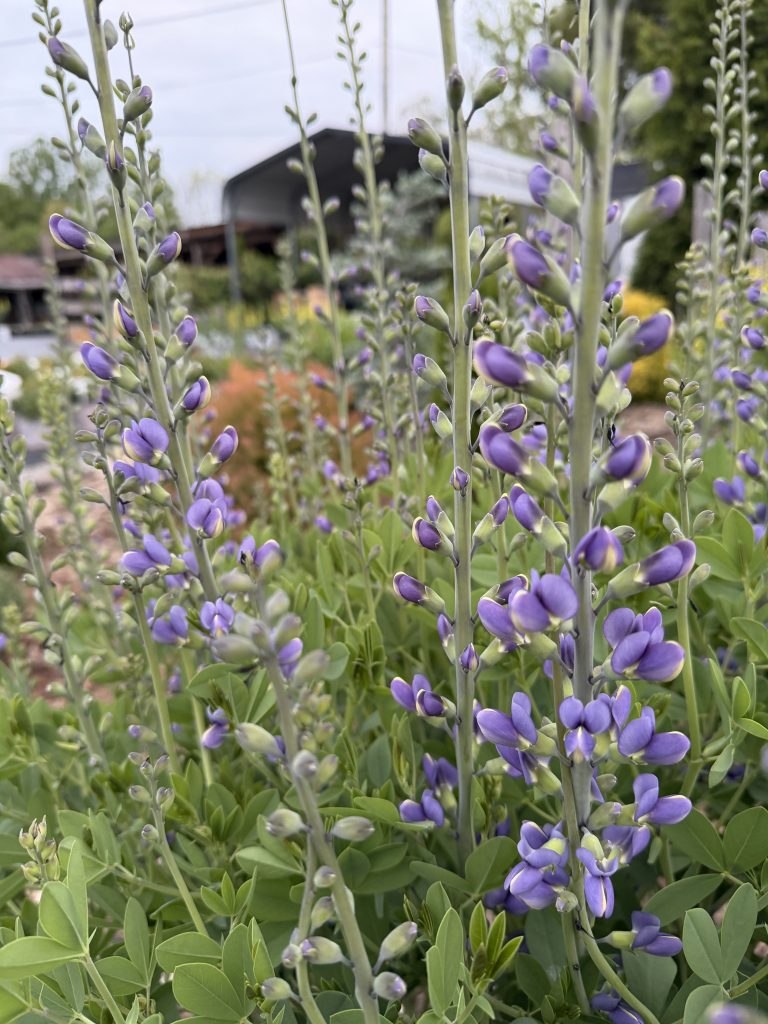
Baptisia isn’t a fussy import or a marketing-driven cultivar pretending to be tough. Several species, including Baptisia australis (blue wild indigo), Baptisia tinctoria (yellow wild indigo), and Baptisia alba (white wild indigo), are genuinely native to North Carolina and have been growing in our meadows, woodland edges, and roadsides for thousands of years.
That matters for two reasons. First, native plants are evolved for our specific climate, soil, and pollinator community — they don’t need pampering. Second, if you’re trying to build a landscape that supports local biodiversity, starting with asheville native perennials like baptisia is one of the most effective steps you can take. It’s a foundation plant for the kind of ecologically meaningful garden more WNC homeowners are choosing every year.
2. It’s Built for WNC Soil and Weather
Baptisia is a member of the pea family, which means it has a long taproot and the ability to fix its own nitrogen from the air. Both traits make it remarkably well-suited to the conditions we deal with in the mountains.
The taproot lets baptisia reach deep into our clay soils to find moisture, which means once it’s established (typically by its second year), it sails through summer dry spells without supplemental irrigation. The nitrogen-fixing trick means it actually thrives in lean, rocky soils where many ornamentals struggle. If you’ve got a sunny spot with poor soil where nothing else seems to want to grow, baptisia is probably the answer.
It’s also fully cold-hardy through USDA zones 3–9, so the worst winter Asheville can throw at it isn’t even close to a problem.
3. Deer Don’t Touch It
Anyone who has gardened in WNC for more than one season knows the deer situation. Hostas get mowed, daylilies get nibbled, azaleas get stripped — and you start asking the local nurseries which plants actually stand a chance.
Baptisia is one of the most reliably deer-resistant perennials you can plant. The foliage contains compounds that deer find unpalatable, and they leave it alone even in winters when other “deer-resistant” plants get desperate browsing. If you’re tired of replacing perennials the deer have decided are buffet items, baptisia is a peaceful, predictable solution.
4. It’s a Pollinator Magnet
The pea-shaped flower spikes that rise above baptisia’s blue-green foliage in late spring are a critical food source for native bumblebees, especially the larger species like the eastern bumblebee that need the strength to pry open the flowers. You’ll often see bumblebees working a baptisia clump from dawn until dusk during peak bloom.
Baptisia is also a larval host plant for several native butterflies and moths, including the Wild Indigo Duskywing and the increasingly rare Frosted Elfin. By planting baptisia, you’re not just feeding adult pollinators — you’re providing the specific plant their caterpillars need to complete their life cycle. That’s the kind of habitat support that makes asheville native perennials truly valuable to local ecology, not just a label on a tag.
After the flowers fade, the seed pods turn black and rattle in the breeze through fall and winter, providing visual interest and seed for songbirds.
5. Plant Once, Enjoy for Decades
Baptisia is one of the longest-lived perennials you can buy. A well-sited plant can easily live 20, 30, even 50 years — slowly forming a stately, shrub-like clump three to four feet tall and equally wide. Unlike many perennials that need dividing every few years, baptisia actually resents disturbance and prefers to be left alone.
That long-lived, low-maintenance character is why so many WNC gardeners are shifting their plant budgets toward baptisia and similar foundational asheville perennials. You’re not buying a one-season splash — you’re investing in a plant that will be a backbone of your garden for the rest of the time you live in your house.
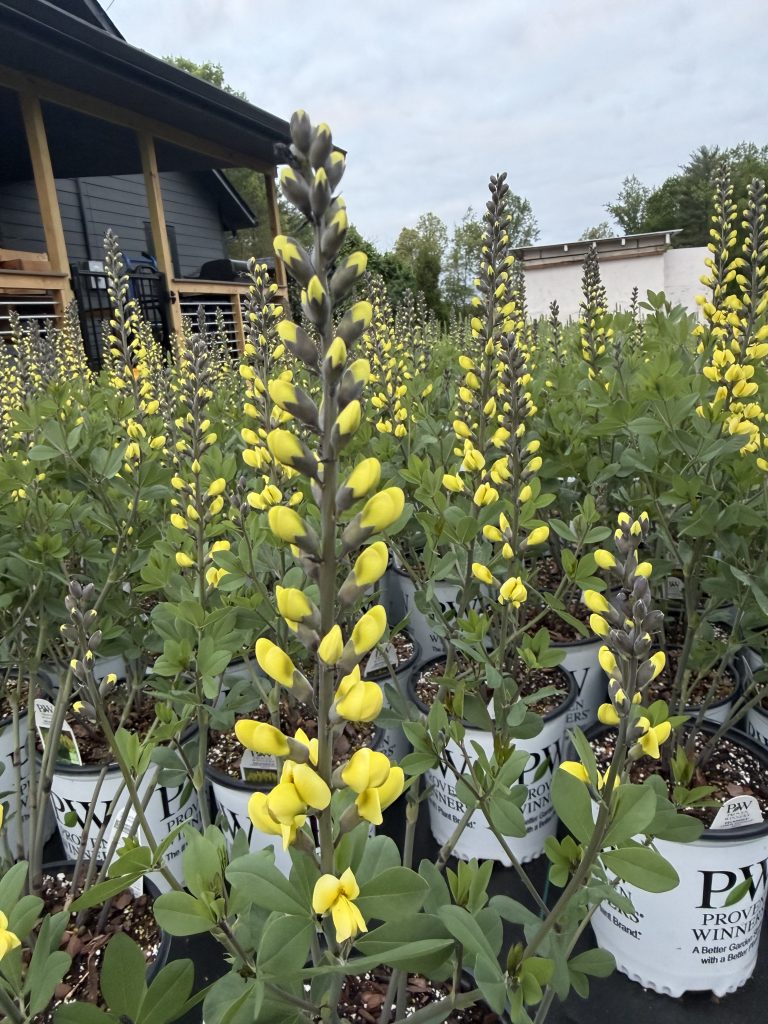
Modern breeding has dramatically expanded the color palette beyond the classic blue, too. The Decadence and Decadence Deluxe series from Walters Gardens now offers baptisia in cherry red, lemon yellow, smoky purple, chocolate brown, white, and bicolor combinations — all with the same toughness, deer resistance, and longevity as the wild species.
How to Grow Baptisia in WNC
Plant baptisia in full sun (six or more hours daily) for best flowering, in average to lean soil with reasonable drainage. It tolerates clay just fine as long as the site doesn’t stay waterlogged in winter. Water regularly the first season to help the taproot establish, then let nature take over. No fertilizer needed — in fact, rich soil can make plants flop.
The first year or two, baptisia looks modest as it puts energy into root development. By year three you’ll have a substantial clump in full bloom, and from there it just keeps getting better.
Where to Find Baptisia in Asheville
If you’re shopping for asheville native perennials and want to add baptisia to your garden, look for it in late spring when it’s in bloom — that’s the easiest time to choose your color. Specialty independent nurseries in the Asheville area typically carry both the wild native species and the modern Decadence hybrids. Bring a photo of your planting site and the staff can help you pick the right cultivar for your conditions.
Baptisia is one of those plants that quietly earns its place in every WNC garden it joins. Plant a few this season, and next spring it just might be your favorite spring flower.
Click here to check out Storm Cloud, another show stopping Asheville native perennial.