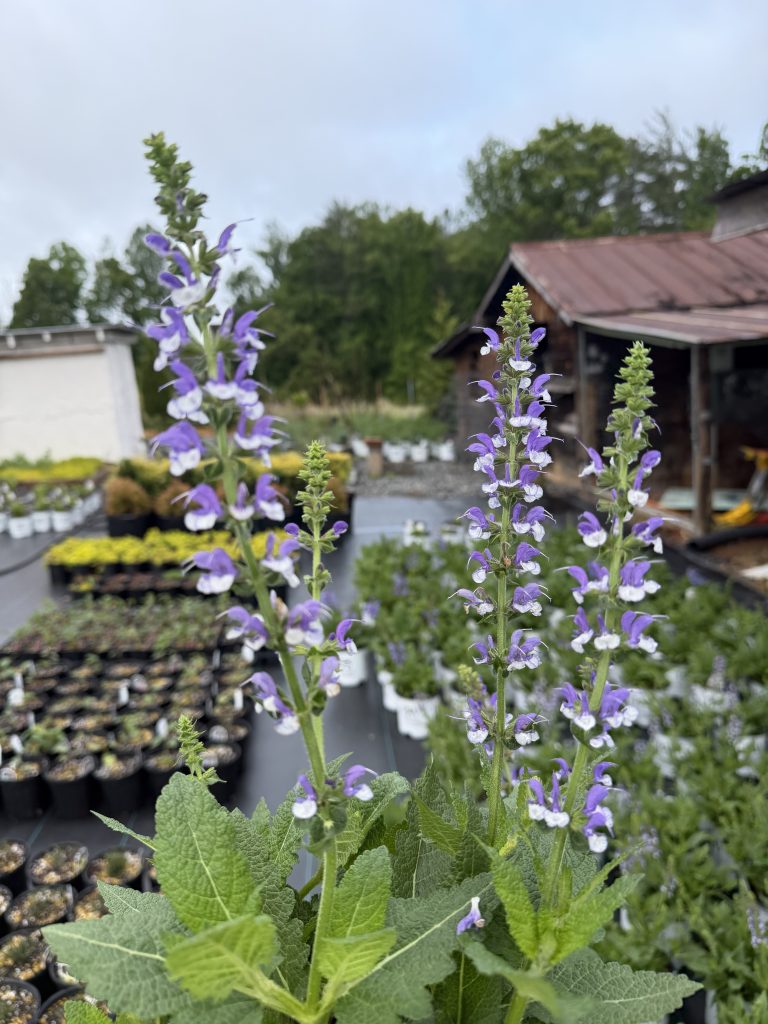
Azure Snow Salvia: A Bicolor Workhorse for Asheville Pollinator Gardens
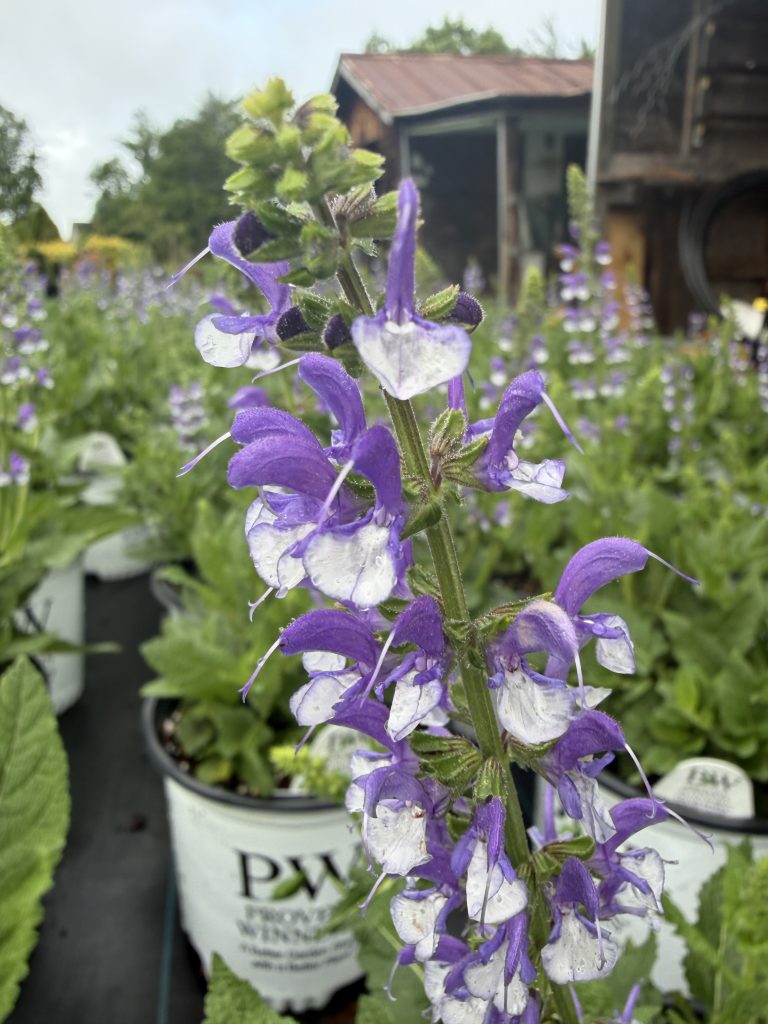
If you’re building or expanding a pollinator garden in Asheville, Salvia nemorosa ‘Azure Snow’ deserves a spot near the top of your list. It’s tough, it’s tidy, it blooms for months, and the bees will tell you everything you need to know about it within five minutes of opening flowers.
What sets it apart from the dozens of other meadow sage cultivars on the market? The flower itself. Each spike carries violet-blue hooded blooms paired with crisp white calyxes — a bicolor effect that reads almost like a frosted lavender from across the garden. It’s striking up close and equally effective in a sweep.
Why It Works in Asheville
Asheville’s climate sits in that sweet spot where many sun-loving perennials thrive — warm summers, cool nights, decent rainfall, and winters cold enough to give plants a true dormancy. Azure Snow is hardy from USDA zones 4 through 8, which puts our region (mostly zone 7a, with cooler pockets at higher elevations) right in the comfort zone.
It’s a tough plant for our conditions:
- Drought tolerant once established. A few deep waterings the first season and it’s set.
- Loves lean soil. Like most Mediterranean-origin perennials, it actually performs better in average to poor soil than in heavily amended beds.
- Deer and rabbit resistant. The aromatic foliage gets passed over almost universally — important in WNC, where deer pressure can shape an entire garden.
- Compact and upright. About 18 to 22 inches tall in bloom, 18 inches wide. No flopping, no staking.
- No serious pests or diseases. Good airflow and a sunny spot are all it asks.
A Pollinator Magnet from Late Spring Through Summer
Azure Snow starts blooming in mid to late May here and continues steadily into July. If you shear it back lightly after the first flush — just snip the spent flower spikes — you’ll get a strong rebloom in late summer that often carries into early fall.
That extended bloom window is exactly what pollinator gardens need. Flowers in May feed early-emerging native bees that have very little else available. Flowers in July fuel the height of bumblebee colony growth. Flowers in September support migrating hummingbirds and queen bumblebees fattening up before winter.
Who you’ll see on it:
- Bumblebees in real numbers — they’re the headline visitor on every salvia in this group
- Native long-tongued bees including mason bees, leafcutter bees, and small carpenter bees
- Honeybees, especially in the morning
- Hummingbirds, particularly in the second flush when fewer competing flowers are available
- Skippers and small butterflies, though salvias are more bee-favored than butterfly-favored
How to Use It in Your Garden
Azure Snow looks best in groups of three or five rather than as a single plant. The bicolor effect builds visually when you mass it. A few combinations that work especially well in Asheville-area gardens:
- With coneflower, black-eyed Susan, and little bluestem for a classic sunny meadow look
- In front of baptisia or amsonia, where the cool blue-white spikes echo the spring blue of those natives
- With catmint (‘Purrsian Blue’ is a great match) along a walkway or driveway edge
- Near a patio or seating area where you can watch the bee traffic up close
- Lining a sunny hellstrip or front walk where soil is poor and reflected heat is high
Care Notes
Plant in full sun — six or more hours — in well-drained soil. Water through the first growing season, then back off. Don’t fertilize. Shear lightly after the first bloom flush to push rebloom. Cut back to a few inches in late winter before new growth emerges.
That’s the entire care plan. Stop by Flat Creek to see Azure Snow in bloom on the bench — once you watch the bees work it, you’ll want it in your garden.