
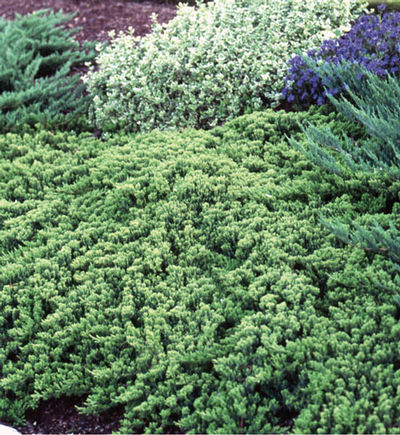
If you’ve got a steep or sloped yard in the Asheville area, creeping and spreading junipers are one of the best investments you can make. They’re drought-tolerant once established, hold soil beautifully on hillsides, and thrive in our Western North Carolina climate. They also look great in winter, which can’t be said about almost any other groundcover. But before you put a single plant in the ground, slope prep is everything. Skip this step and you’ll be fighting weeds for years. Do it right and your junipers will reward you with almost zero maintenance.
Here’s how we recommend tackling it.
Step 1: Kill the Weeds — All of Them
Asheville slopes are notorious for wild violets, brambles, nutsedge, and persistent grasses that will come back with a vengeance if you don’t deal with them first. Don’t just pull what you see on the surface — you need to address the root systems.
For a non-chemical approach, smother the area with cardboard (overlapping the edges by at least 6 inches) and let it sit for 4–6 weeks. This works well on gentler slopes with moderate weed pressure.
For heavier infestations, a targeted application of a non-selective herbicide like glyphosate will give you a cleaner slate. Apply on a calm, dry day — Asheville’s mountain winds can carry drift — and wait at least two weeks before planting to let everything fully die back. You may need a second application for stubborn perennial weeds like poison ivy or Japanese knotweed, which are common in our region.
Once weeds are dead, rake out as much debris as possible. You don’t need to remove every root, but clear the surface so you’re working with relatively bare soil.
Step 2: Mulch with Bark — Deeply
This is the step most homeowners rush or underdo. On a slope, bark mulch does double duty: it suppresses weed regrowth and slows erosion while your junipers are getting established.
Use a shredded hardwood bark or a chunky bark mulch — both hold well on slopes. Avoid fine mulches like wood chips or dyed mulch, which can wash away in Asheville’s frequent heavy rains. Apply a layer 3 to 4 inches deep across the entire planting area. Remember, the steeper the slope, the chunkier your mulch needs to be to stick.
On steeper slopes, consider simple erosion control netting over the mulch to keep it in place through the first season. Alternatively, overlapping the mulch around planted areas and allowing it to mat slightly will help it anchor itself.
Sometimes it’s just too steep to mulch. In that case, you can try using a pre-emergant herbicide like Preen to keep the weeds out instead for the first year or two. Work in smaller patches to make sure that they survive, go with the hardier varieties of juniper like blue rug, and try to water weekly through the first summer.
Step 3: Plant Your Junipers
With weeds takeen care of and mulch in place,it’s time for diggin. When you plant, try to terrace the holes so the water running off the slope will stop at each plant. If you are dealing with very heavy clay, we like to use soil conditioner to help with drainage. Good juniper varieties for Asheville slopes include:
Blue Rug Juniper (Juniperus horizontalis ‘Wiltonii’) — extremely low and spreading Bar Harbor Juniper — excellent cold hardiness for our mountain winters
Procumbens Nana Juniper— thicker and denser so it chokes out more weeds than the other cultivars, but slower growing. Our favorite variety.
Blue Pacific Juniper (Juniperus conferta ‘Blue Pacific’) — probably the best blue color and a bit denser growth than blue rug. Not as cold hardy and better for slopes that can be mulched.
Gold Pacific Juniper (Juniperus conferta ‘All Gold’)– similar to Blue Pacific but with both gold and blue shades to the foliage. Gives a unique look if you can find it.
Space plants according to their mature spread — usually 3-4′ feet apart for some overlap and better weed suppression. They’ll look sparse the first year, but they fill in fast once established.
Water deeply after planting and keep the root zone moist through the first summer. After that, junipers are remarkably drought-tolerant and largely self-sufficient on our Appalachian slopes.
The Payoff
Done right, a juniper-covered slope in Asheville is nearly maintenance-free. No mowing, minimal fertilizing, and the plants naturally outcompete most weeds once they’ve spread. The prep work up front — killing weeds thoroughly and laying down that thick bark mulch — makes all the difference between a slope that thrives and one that becomes a weed patch with a few struggling plants in it.
Have we missed anything about slope planting in the Asheville area? We’d love to hear from you at Ryan@flatcreekplantfarm.com!